The Rise of Digital Nomad Infrastructure
The global workforce is undergoing a seismic shift, and the silhouette of the digital nomad—working from a beachside cafe one month and a mountain town the next—has evolved from a fringe trend into a significant demographic. In response, a new ecosystem of infrastructure is rapidly emerging. Cities and corporations are no longer simply acknowledging remote work; they are actively competing to attract and support this new class of location-independent professionals by building dedicated spaces, services, and technologies.
Cities Competing for the 'Nomad Dollar'
Forward-thinking cities and even entire countries have recognized the immense economic potential of digital nomads. These individuals inject money into local economies, often for extended stays, without competing for local jobs. In response, destinations from Lisbon to Bali, and countries like Portugal and Croatia, have launched specialized visa programs, such as the 'D7' or 'Digital Nomad Visa,' to simplify legal residency. Beyond visas, municipal governments are investing in robust public Wi-Fi, creating co-working spaces in public libraries, and hosting networking events to integrate nomads into the community, effectively marketing themselves as the ideal 'workcation' hub.
The Evolution of Workspaces: Beyond the Coffee Shop
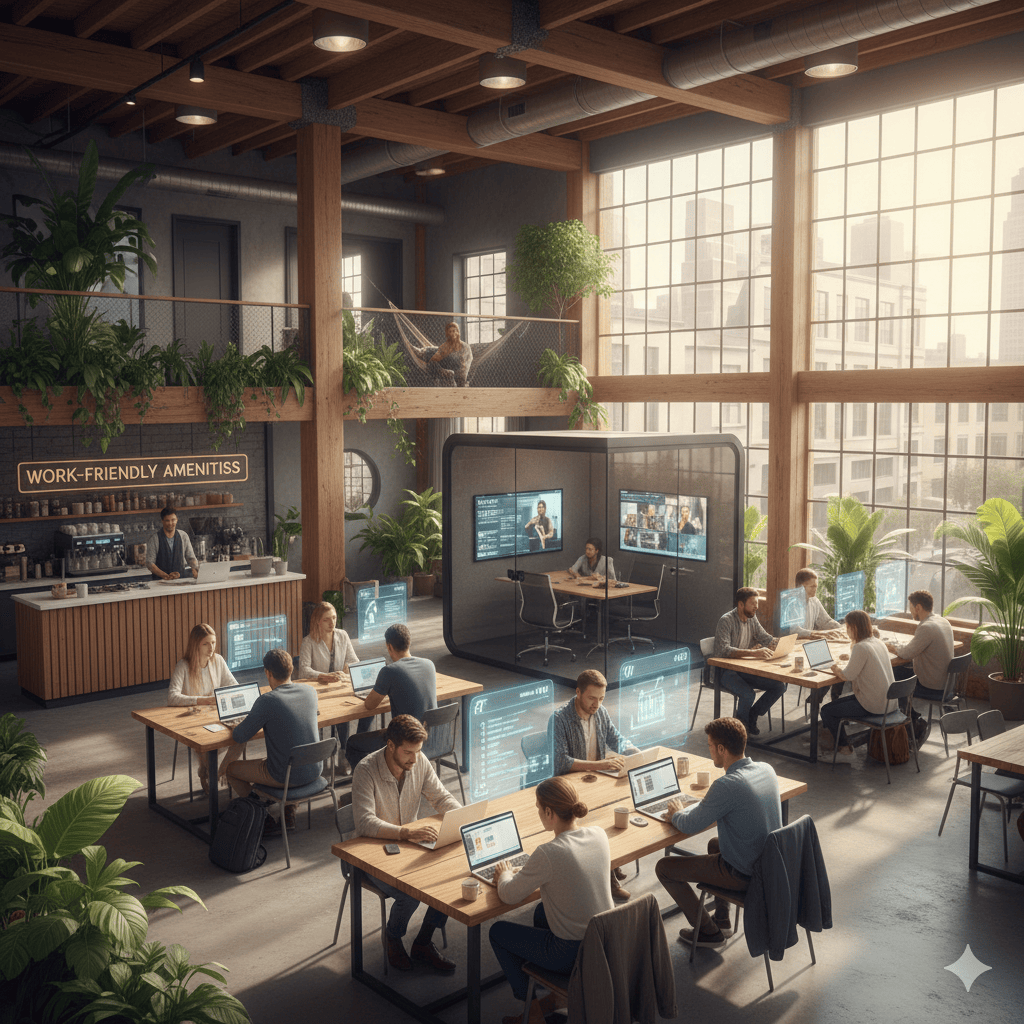
The infrastructure for where work happens has expanded far beyond unreliable cafe Wi-Fi. The co-working industry has boomed, offering not just a desk, but a professional ecosystem with high-speed internet, meeting rooms, and networking opportunities. We are now seeing the rise of co-living spaces, which bundle accommodation with a premium workspace, creating instant communities for nomads. Furthermore, the hospitality industry is adapting, with hotels and Airbnb hosts explicitly marketing 'work-friendly' amenities like dedicated desks, ergonomic chairs, and lightning-fast broadband to cater to this new demand.
Corporate Adaptation and Remote-First Technology
On the corporate front, companies are building the internal infrastructure to manage a distributed workforce effectively. This goes beyond simply allowing remote work; it involves adopting a 'remote-first' mindset. Investment is pouring into collaboration suites like Slack, Microsoft Teams, and Asana, which become the company's digital headquarters. Furthermore, the rise of asynchronous communication tools and project management platforms ensures that collaboration can happen seamlessly across different time zones, making a truly global team feasible and productive.
Specialized Services for a Mobile Life
A whole new market of specialized services has sprung up to support the logistical challenges of a nomadic lifestyle. Nomad-focused insurance providers offer health coverage that is valid across multiple countries. Financial technology companies provide borderless banking, multi-currency accounts, and crypto payment options to simplify finances. Online platforms and apps are dedicated to helping nomads find the next ideal destination, navigate visa requirements, and connect with like-minded individuals, effectively creating a support system for a life in motion.
A Permanent Shift in Global Work Culture
The development of digital nomad infrastructure signals a permanent transformation in how and where we work. It is a clear indication that remote work is not a temporary phenomenon but a lasting feature of the global economy. As this infrastructure continues to mature, becoming more accessible and sophisticated, it will further empower individuals to design their lives around their work, rather than the other way around, fostering a new era of global mobility and professional freedom.
Other articles

AI Revolution: Transforming Industries in 2025
Artificial intelligence is reshaping business models and creating new opportunities across various sectors worldwide.

Blockchain Beyond Cryptocurrency: Real-World Applications
Exploring how blockchain technology is revolutionizing supply chains, voting systems, and digital identity management.
Contact
Get in touch with Urban Lens. We'd love to hear from you about urban design, city planning, and urban lifestyle topics.